Ordinary life in post-Soviet Russia
Post-Soviet Russia is a federal semi-presidential republic that has faced serious challenges in building a political system since the Soviet Union collapsed at the end of 1991. The lessons answer how political upheaval shapes ordinary life and what readers can understand about its effects. They trace the connections between political change and everyday experience.
3 articles, 1 book · about 1 hr 25 min of reading and viewing
The reading path
- Readthe political climate of post-soviet russia · Wikipedia · 60+ min read
In the political climate of post-soviet russia, the June 1991 Russian presidential election conferred legitimacy on the office, unlike Gorbachev, who had been appointed by the Soviet parliament. Yeltsin won that popular election with more than 57 percent of the vote, handily defeating five other candidates. The political climate of post-soviet russia saw the State Duma overwhelmingly vote no confidence in the Government in June 1995. The vote was triggered by a Chechen rebel raid into the neighboring Russian town of Budenovsk, where the rebels were able to take more than 1,000 hostages. Mikhail Gorbachev, General Secretary of the Communist Party of the Soviet Union from 1985 to 1991, encouraged nationalities in the union republics, including the Russian Republic, to assert their rights through policies such as glasnost, or public "voicing." Glasnost made possible open discussion of democratic reforms and long-ignored public problems such as pollution.
- Read"The Death of Russian Democracy Under Putin by Jordan Nakdimon @ UCLA" · democratic-erosion.com · 6 min read
Since the turn of the century, there have been at least 34 cases of work-related murder of Russian journalists. Justice is fully served in only 2.9% of these cases, according to Qiu 2016.
- ReadRussian Demographics and Power: Does the Kremlin Have a Long Game? · War on the Rocks · 19 min read
Since 2014, Russia's foreign policy gambits have in part exacerbated its demographic problem, from lower birth rates due to poor economic conditions to urban Russians choosing to leave the country. The recession beginning in 2013 and sanctions resulting from the confrontation with the West increased a steady exodus of urban Russians.
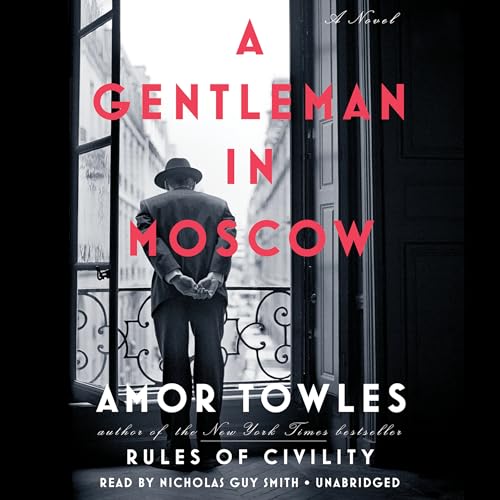
- BookA Gentleman in Moscow · Bookshop.org
A Gentleman in Moscow by Amor Towles begins its main narrative when the Count returns from Paris after the Bolshevik revolution of 1917, is arrested, and is charged with "social parasitism."


Book links are Bookshop.org affiliate links. Curiate may earn a commission on purchases, at no extra cost to you — Bookshop.org also gives a share to independent bookshops.
Reading paths, built to arrive somewhere
Curiate turns what you are curious about into a short path — a quick lesson on an article, something to watch, and a book to go deep on. Free to browse.