How political communication shapes group identity
Political communication is the practice or study of political messaging, such as in political campaigns, speeches and political advertising, often within the mass media. It explores how political language and messages shape public perception, opinion and group identity, and connects communication studies with political science.
2 articles, 1 book · about 23 min of reading and viewing
The reading path
- Readpolitical communication · Wikipedia · 17 min read
Political communication uses metaphors, narratives, and strategic discourse to shape public perception and opinion. These rhetorical techniques contribute to framing how political issues are presented and understood, shaping how the public interprets political events and policies. In political communication, Edward S. Herman and Noam Chomsky developed the propaganda model during the 1980s through a political economy analysis of the U.S. corporate news media. The model theorized that globalized elites' interests in the US warped mass media's journalistic integrity and attempts to communicate news. Political communication in ancient Greece included public speeches such as those delivered by Pericles in Athens, which played a crucial role in shaping political discourse and rallying public support for war efforts.
- ReadThe Linguistics of Mass Persuasion: How Politicians Make "Fetch" Happen (Part I) - JSTOR Daily · JSTOR Daily · 6 min read
Political language draws on the timeless question of "us vs. them." It shapes emotional identity by offering a group to belong to and ideological goals to work towards, alongside a competing force to fight against or values to despise.
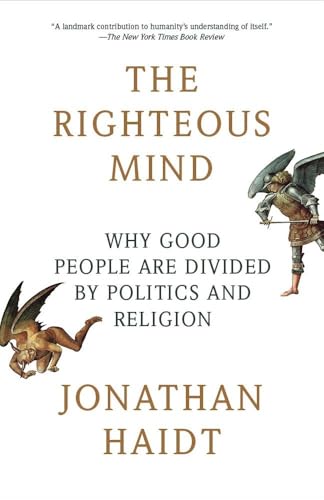
- BookThe Righteous Mind: Why Good People Are Divided by Politics and Religion · Bookshop.org
The Righteous Mind by Jonathan Haidt describes how beliefs are driven primarily by intuition, with reason often used to justify them, and presents moral foundations theory applied to the political beliefs of liberals, conservatives, and libertarians in the US.


Book links are Bookshop.org affiliate links. Curiate may earn a commission on purchases, at no extra cost to you — Bookshop.org also gives a share to independent bookshops.
Reading paths, built to arrive somewhere
Curiate turns what you are curious about into a short path — a quick lesson on an article, something to watch, and a book to go deep on. Free to browse.