How political violence and terrorism shape elections
Political violence and terrorism is violence used to achieve political goals, including violence by states against other states, civilians, and non-state actors, and by violent non-state actors against states and civilians. These lessons help readers understand how political aims, grievances, and electoral competition relate to violence and the contested meaning of terrorism. They consider how violence is defined and shaped by political conflict.
3 articles, 1 video, 1 book · about 43 min of reading and viewing
The reading path
- Readpolitical violence and terrorism · Wikipedia · 31 min read
In political violence and terrorism, what is and is not considered terrorism is a controversial political question: states have often used the label to demonize their enemies while obscuring state-administered "legal" violence. Electoral violence includes coercion, intimidation, or physical harm intended to affect an electoral process or arising amid electoral competition. It can influence election outcomes, disrupt polls, or protest or suppress protests against results. Ted Robert Gurr uses relative deprivation theory in Why Men Rebel to explain why men commit acts of violence. The collective discontent between expected and achieved welfare leads people to resort to violence.
- ReadInfographic: Suicide Terrorism, Past and Present · War on the Rocks · 3 min read
Suicide attacks in terrorism produced nearly ten times as many fatalities and nearly seven times as many injuries as non-suicide bombings through 2013, despite relying on similar weapons. Figure 3 compares casualty data for suicide attacks with eight categories of non-suicide attacks.
- ReadWhat Violent Acts Get Defined as Terrorism - JSTOR Daily · JSTOR Daily · 3 min read
Read about how politically motivated violence is defined as terrorism, its history, and debates over targets, movements, and the Capitol bombing.
- WatchWhite Supremacy vs. Antifa: Is Political Violence a Good Answer to Racist Violence? | Salman Rushdie · YouTube · 6 min watch
Salman Rushdie rejects political violence even in virtuous causes, while saying there is no moral equivalence between neo-Nazis and people gathering to oppose them. The video also covers Rushdie's view that public discourse has become too personal and that people often conflate feelings with beliefs, contributing to a polarized climate.
- BookThe Anatomy of Fascism · Bookshop.org
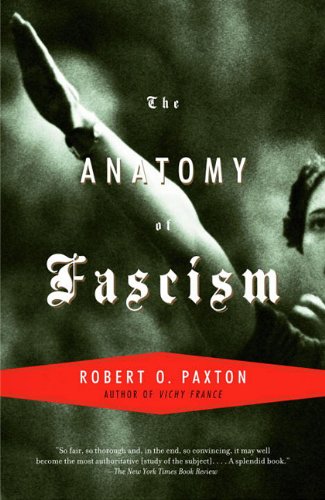
The Anatomy of Fascism by Robert O. Paxton examines Fascist Italy and Nazi Germany in detail, arguing that fascism only took root in countries with more dysfunctional societies where conservative elites allowed coalitions with fascists. Paxton distinguishes the Nazi Party's growing importance in Germany from its place alongside the state apparatus in Italy.


Book links are Bookshop.org affiliate links. Curiate may earn a commission on purchases, at no extra cost to you — Bookshop.org also gives a share to independent bookshops.
Reading paths, built to arrive somewhere
Curiate turns what you are curious about into a short path — a quick lesson on an article, something to watch, and a book to go deep on. Free to browse.