How public relations earns media coverage
Public relations is managing and sharing information from a person or organization with the public to influence how they see it, and most textbooks regard the Publicity Bureau's establishment in Boston in 1900 as marking the founding of the profession. The lessons answer how publicity earns media coverage and help readers understand the choices and relationships involved.
2 articles, 1 video, 1 book · about 40 min of reading and viewing
The reading path
- Readpublic relations · Wikipedia · 33 min read
Public relations professionals can use media directories that list broadcast, print and online media, along with editors' names, deadlines and the types of contributions they may accept. In public relations, stakeholder theory identifies people who have a stake in an institution or issue. All audiences are stakeholders or presumptive stakeholders, but not all stakeholders are members of a target audience. Spin techniques include cherry-picking facts and quotes, "non-denial denial," phrasing that presumes unproven truths, euphemisms for drawing attention away from items considered distasteful, and ambiguity. According to Jim Hoggan, spin is a diversion whose primary effect is ultimately to undermine public relations' goal of building trust and nurturing a good relationship.
- ReadAsk the Publicists: What's the Difference Between Marketing and Publicity? · Literary Hub · 5 min read
Book publicists create tailored pitches for books they think will resonate with critics, editors, producers, and event coordinators. They also prepare press releases, author Q&As, talking points, and other supplementary press materials to lure the media into reviewing books.
- WatchMatthew Nisbet On Public Relations for Science | Big Think. · YouTube · 2 min watch
Matthew Nisbet explains that concepts used in political campaigns can also apply to communicating science, including connecting complex issues to what audiences understand or value.
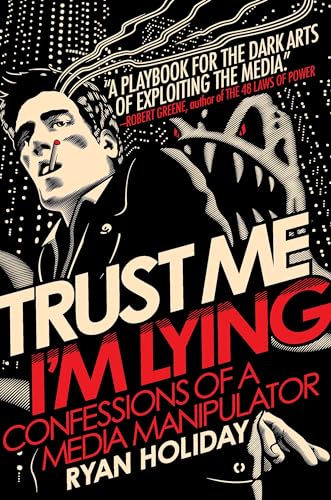
- BookTrust Me, I'm Lying: Confessions of a Media Manipulator · Bookshop.org
Trust Me, I'm Lying by Ryan Holiday chronicles his work as a media strategist and publicity work for Tucker Max. Holiday explains how blogs drive and can be manipulated to shape news, then describes how those tactics can backfire and their consequences for the media system.


Book links are Bookshop.org affiliate links. Curiate may earn a commission on purchases, at no extra cost to you — Bookshop.org also gives a share to independent bookshops.
Reading paths, built to arrive somewhere
Curiate turns what you are curious about into a short path — a quick lesson on an article, something to watch, and a book to go deep on. Free to browse.