How sufganiyot became Hanukkah's job creators
Food historian Gil Marks dates the first modern sufganiyah to a 1485 cookbook recipe for gefullte krapfen, which Jews adapted with goose fat and served on Chanukah. How did fried pastries become Hanukkah food, and how did a labor union help make sufganiyot Israel's favorite? Sufganiyah is a round, jelly doughnut-like pastry eaten around the world during Hanukkah.
2 articles, 1 book
The reading path
- ReadSufganiyah · Wikipedia
The Histadrut, Israel's national labor union, formed in 1920, pushed to replace the homemade latke with the sufganiyah as Israel's quintessential Hanukkah food to provide more work for its members. Their effort was successful, and sufganiyot became the most popular food for Hanukkah in Israel. Among Polish Jews, jelly doughnuts were fried in oil or schmaltz rather than lard due to kashrut laws, and were known in Poland as ponchkis. Polish Jewish immigrants to Mandatory Palestine brought the recipe and the tradition of eating them on Hanukkah. Rabbi Maimon ben Yosef, father of the 12th-century rabbi Maimonides, wrote that "one must not make light of the custom of eating sofganim [fritters] on Chanukah. It is a custom of the Kadmonim [the ancient ones]". The tradition of eating deep-fried pastries on Hanukkah was considered ancient even then, linking fried foods to the holiday custom.
- Read"The 'Hole' Truth About Sufganiyot" · jewishaction.com
Food historian Gil Marks dates the first modern sufganiya to 1485, when a recipe for gefullte krapfen appeared in Kuckenmeisterei (Mastery in the kitchen), possibly the first published cookbook. Jews substituted goose fat for lard and served their version on Chanukah.
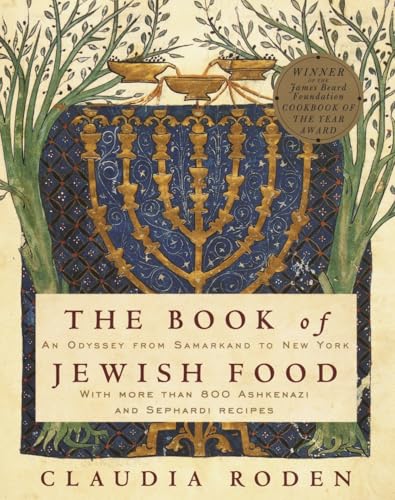
- BookThe book of Jewish food · Bookshop.org
The Book of Jewish Food by Claudia Roden gathers selected recipes from almost fifteen years of traveling, tasting, watching, and talking to cooks and food sellers, alongside travel tales and community stories. It shows how food can be understood through the people and stories around it.


Book links are Bookshop.org affiliate links. Curiate may earn a commission on purchases, at no extra cost to you — Bookshop.org also gives a share to independent bookshops.
Reading paths, built to arrive somewhere
Curiate turns what you are curious about into a short path — a quick lesson on an article, something to watch, and a book to go deep on. Free to browse.