How the art and architecture of ancient Mesopotamia made meaning endure
The art and architecture of ancient Mesopotamia is the art of a region widely considered the cradle of civilization, known for durable sculpture in stone and clay, while little painting has survived. How did Mesopotamia make meaning endure, and how can its art and architecture help us understand that? The lessons consider how buildings, images, and writing carried meaning across time.
2 articles, 1 book · about 1 hr of reading and viewing
The reading path
- Readthe art and architecture of ancient mesopotamia · Wikipedia · 32 min read
The art of ancient Mesopotamia included the so-called Standard of Ur, an inlaid box or set of panels of uncertain function, finely inlaid with partly figurative designs. The Royal Cemetery at Ur (c. 2650 BC) also yielded two figures of a Ram in a Thicket, the Copper Bull and a bull's head on one of the Lyres of Ur. Assyrian palace art included extremely large schemes of finely detailed narrative low reliefs in stone or gypsum alabaster, originally painted, from around 879 BC. The precisely delineated reliefs concerned royal affairs, chiefly hunting and war making. Ubaid-period art included stamp seals depicting animals in a stylized fashion and, at the period's end, circa 4000 BC, the first known depiction of the Master of Animals. A terracotta stamp seal with the Master of Animals motif was found at Tello, ancient Girsu.
- ReadArt History: The Ancient Near East/Mesopotamia · mencher.blog · 28 min read
Mesopotamia had written documents on clay tablets bearing cuneiform, a form of pictographic writing that developed from simple pictures into abstract letters representing concepts. This writing provides information that helps interpret what the art means and what life was like at the time.
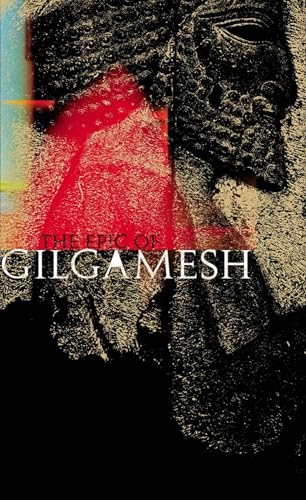
- BookThe Epic of Gilgamesh · Bookshop.org
The Epic of Gilgamesh by Anonymous is a poem preserved on clay tablets dating back as much as four thousand years. It is about family, friendship, the duties of kings, and mankind's eternal struggle with the fear of death.


Book links are Bookshop.org affiliate links. Curiate may earn a commission on purchases, at no extra cost to you — Bookshop.org also gives a share to independent bookshops.
Reading paths, built to arrive somewhere
Curiate turns what you are curious about into a short path — a quick lesson on an article, something to watch, and a book to go deep on. Free to browse.