How the feminist art movement of the 1970s challenged the art canon
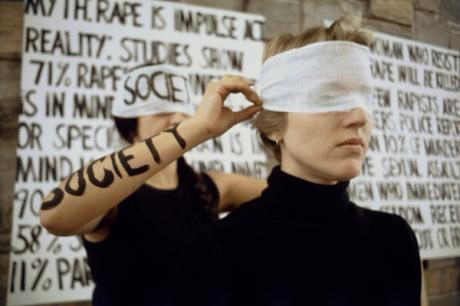
The feminist art movement of the 1970s refers to feminists' international efforts to produce art reflecting women's lives and experiences and to change how contemporary art is produced and perceived. It began in the 1960s and flourished throughout the 1970s as an outgrowth of the second wave of feminism.
3 articles, 1 book · about 32 min of reading and viewing
The reading path
- Readthe feminist art movement of the 1970s · Wikipedia · 26 min read
The Dinner Party by Chicago is an art installation symbolically representing women's history, widely considered the first epic feminist artwork and very significant in Feminist art. Its 39 elaborate place settings on a triangular table represent 39 mythical and historical famous women, challenging the exclusion of women from art history. Carolee Schneemann's "Interior Scroll" is a performance from 1975 in which she stood on a table, gently unrolled a scroll tucked inside her vagina, and read aloud from it. The artwork criticizes the male-dominated art world and stands for the reclamation of women's bodies. Martha Rosler's 1975 video performance "Semiotics of the Kitchen" parodies a cooking show as she vents resentment and rage with kitchen implements, rather than showcasing domestic prowess. The show criticizes traditional gender norms and the notion that women should be submissive and domestic.
- ReadLinda Nochlin on "Why Have There Been No Great Women Artists" - JSTOR Daily · JSTOR Daily · 2 min read
Linda Nochlin, an art historian and critic, argued that women were excluded from the academy, keeping them from art production and the art market. Her 1971 essay "Why Have There Been No Great Women Artists?" laid groundwork for public understanding of the systemic barriers women faced in the art world during the feminist art movement of the 1970s.
- ReadNew documentary celebrates women pioneers in performance art · The Art Newspaper · 4 min read
A little-known 1983 event in the feminist art movement involved Maren Hassinger and Senga Nengudi protesting the lack of Black artists at a feminist art exhibition at the Long Beach Museum of Art. Covered with white sheets, they stood outside the entrance as "spooks who sat by the door".
- BookThe Guerrilla Girls' Bedside Companion to the History of Western Art · Bookshop.org
The Guerrilla Girls' Bedside Companion to the History of Western Art by Guerrilla Girls uses humor and activism to challenge male-dominated narratives of art history, offering a perspective on the feminist art movement of the 1970s.


Book links are Bookshop.org affiliate links. Curiate may earn a commission on purchases, at no extra cost to you — Bookshop.org also gives a share to independent bookshops.
Reading paths, built to arrive somewhere
Curiate turns what you are curious about into a short path — a quick lesson on an article, something to watch, and a book to go deep on. Free to browse.