How the history of mathematics shapes our world
The history of mathematics deals with where mathematical discoveries came from and the methods and notation people used in the past. These lessons answer how mathematical ideas shape our world and help readers understand their influence across different times and areas of mathematics.
2 articles, 1 book · about 1 hr 20 min of reading and viewing
The reading path
- Readthe history of mathematics · Wikipedia · 60+ min read
In the history of mathematics, Babylonian mathematics used a sexagesimal (base-60) numeral system. Its notation could represent fractions as easily as whole numbers, so multiplying numbers that contained fractions was no different from multiplying integers. Brahmagupta lucidly explained zero as both a placeholder and decimal digit and explained the Hindu, Arabic numeral system in the 7th century. A translation of his Indian text on mathematics (c. 770) introduced Islamic mathematicians to this number system, which they adapted as Arabic numerals.
- ReadAn Ancient Geometry Problem Falls to New Mathematical Techniques | Quanta Magazine · Quanta Magazine · 5 min read
Laczkovich transformed the geometry problem into a graph theory problem. He took a large graph with two separate sets of vertices, one corresponding to a circle, the other to a square, and established one-to-one correspondences between vertices in one set and those in the other.
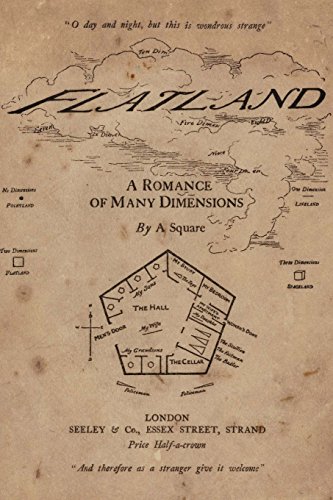
- BookFlatland: A Romance of Many Dimensions · Bookshop.org
Flatland by Edwin A. Abbott is a work of science (and mathematical) fiction that offers a satirical, imaginative way to engage with mathematics.


Book links are Bookshop.org affiliate links. Curiate may earn a commission on purchases, at no extra cost to you — Bookshop.org also gives a share to independent bookshops.
Reading paths, built to arrive somewhere
Curiate turns what you are curious about into a short path — a quick lesson on an article, something to watch, and a book to go deep on. Free to browse.