Impressionism, perception, and changing artistic approaches
Impressionism is a style named after Claude Monet's work Impression, Sunrise, which prompted critic Louis Leroy to coin the term in a satirical 1874 review of the First Impressionist Exhibition. How did artists convey fleeting perception, and how did their approaches change? Readers will understand how techniques for depicting visual experience developed into varied forms of artistic expression.
2 articles, 1 book
The reading path
- Readimpressionism · Wikipedia
Impressionists used short, thick strokes to capture a subject's essence, and often applied colours side by side with little mixing to make them appear more vivid. These techniques emphasised changing natural light and colour reflections, helping capture fleeting perception. Edgar Degas was both an avid photographer and a collector of Japanese prints. His The Dance Class (La classe de danse) of 1874 shows both influences in its asymmetrical composition, with dancers seemingly caught off guard in awkward poses and empty floor space in the lower right quadrant, reflecting Impressionists' interest in depicting visual experience and contemporary subjects. Post-Impressionists turned away from realistically reproducing the optical sensations of light and colour toward symbolic content and emotional expression. The shift also reached some original Impressionists: Camille Pissarro briefly painted in a pointillist manner, while Paul Cézanne developed a highly individual vision emphasising pictorial structure and is more often called a post-Impressionist. These cases show how artists moved beyond fleeting optical perception even as labels remained difficult to assign.
- Read"Impressionism: Art and Modernity" · metmuseum.org
Gustave Caillebotte, an Impressionist painter, used a detached, objective view in his 1877 Paris Street, Rainy Day (Art Institute, Chicago), abandoning sentimental depictions and explicit narratives to suggest what is going on. Impressionist landscapes were brought up to date with innovative compositions, light effects, and use of color, while urban scenes depicted fleeting yet typical moments.
- BookLuncheon of the Boating Party · Bookshop.org
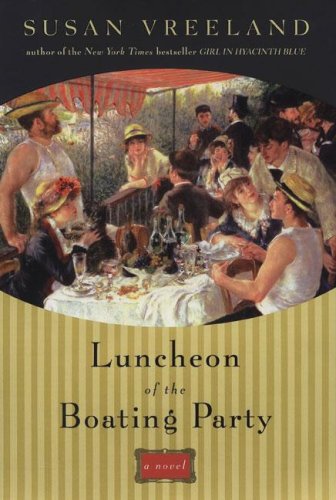
Luncheon of the Boating Party by Susan Vreeland describes Renoir's challenging project amid personal crises in art and love, questions of loyalty, and diverging styles within the Impressionist group. Narrated by Renoir and seven models in Paris and on the Seine, it describes the era's gusto, hedonism, and art.

Book links are Bookshop.org affiliate links. Curiate may earn a commission on purchases, at no extra cost to you — Bookshop.org also gives a share to independent bookshops.
Reading paths, built to arrive somewhere
Curiate turns what you are curious about into a short path — a quick lesson on an article, something to watch, and a book to go deep on. Free to browse.