Sound art, listening, and spatial experience
Sound art uses sound as a primary medium that unfolds over time, and may sit within visual art, experimental music, or both. The lessons answer how seeing and hearing shape art, helping readers understand how sound and space influence one another. They consider how artistic experiences take form through listening and perception.
2 articles, 1 book
The reading path
- Readthe intersection of music and visual art · Wikipedia
A sound installation lets visitors stay to hear sound develop over time and explore how different sounds are arranged in space. It may use speakers placed at different points or piano strings played by a performer or the public; in museums, interactive digital technology combined with multi-channel speakers is sometimes called sound scenography. Bill Fontana's urban sound sculpture shifts ambient noise within cityscapes to create distinct auditory encounters. By modifying a space's soundscape, his approach changes how listeners perceive their environment and highlights its auditory and visual elements. An open-form sound installation must work whether the public stays for a few minutes or longer, so the artist organizes sound to suit both experiences. A linear structure offers another way to shape what listeners hear: sound develops as it does in a musical composition.
- BookWays of Seeing · Bookshop.org
Architecture is a sophisticated graphic practice, while sound is "unfixed, ethereal, evanescent, and vibratory," vibrating through walls and from under floors. Sound and architecture may be oppositional, but sound installation stages their integration, which may be mutual and also argumentative, and locates listening within a spatial scene.
- ReadBackground Noise: Perspectives on Sound Art - New Music USA · New Music USA
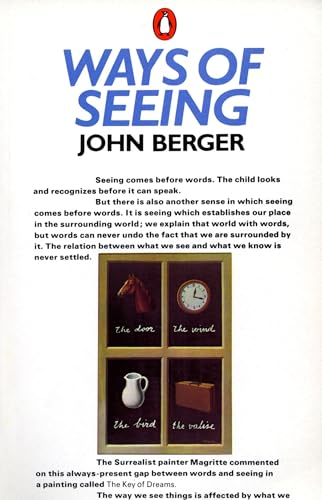
Ways of Seeing is a 1972 television series of 30-minute films created chiefly by writer John Berger and producer Mike Dibb. It was broadcast on BBC Two in January 1972 and adapted into a book of the same name.


Book links are Bookshop.org affiliate links. Curiate may earn a commission on purchases, at no extra cost to you — Bookshop.org also gives a share to independent bookshops.
Reading paths, built to arrive somewhere
Curiate turns what you are curious about into a short path — a quick lesson on an article, something to watch, and a book to go deep on. Free to browse.