Media in society and public discourse
The role of media in society concerns mass media, forms of media that reach large audiences via mass communication. How do media forms shape public discourse? By the end, readers will understand how media can influence what people encounter, how they interpret issues, and who can participate in public discussion.
2 articles, 1 book
The reading path
- Readthe role of media in society · Wikipedia
Media artist Joey Skaggs has demonstrated how fabricated press releases, staged events and fictitious experts can manipulate mass media. His long-running series of media hoaxes reveal how news outlets can be drawn to sensational narratives, often publishing stories with minimal fact-checking, and his work has been cited as a critique of journalistic practices and a case study in the vulnerabilities of modern media systems. Historical media coverage focused on African Americans in contexts such as crime, drug use and gang violence, resulting in a distorted and harmful public perception. This example shows how media framing and selective emphasis can shape how white Americans perceive African Americans. Toward the end of the 20th century, the World Wide Web marked an era in which most individuals could have a means of exposure on a scale comparable to that of mass media. The Internet is a more interactive medium of mass media, described as "a network of networks", and forms of internet media include blogs, microblogs, RSS feeds, and podcasts.
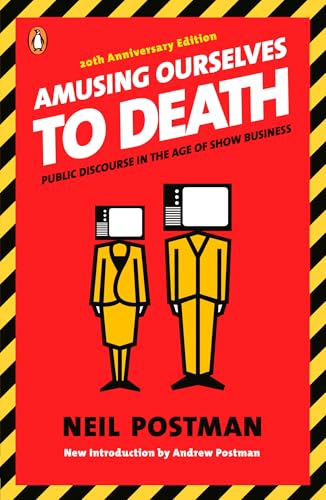
- BookAmusing Ourselves to Death: Public Discourse in the Age of Show Business · Bookshop.org
Before mass media took an antismoking stance, smoking was considered a personal health issue. Agenda-setting theory shows how media attention can move issues into public discussion: advertisements, public relations campaigns, and media outlets promoted antismoking sentiments, making smoking a public health issue rather than a personal one.
- Read2.2 Media Effects Theories | Media and Culture · courses.lumenlearning.com
Amusing Ourselves to Death by Neil Postman examines the differences between written speech, which he argues reached its prime in the early to mid-19th century, and televisual communication, which relies mostly on visual images to "sell" lifestyles.

Book links are Bookshop.org affiliate links. Curiate may earn a commission on purchases, at no extra cost to you — Bookshop.org also gives a share to independent bookshops.
Reading paths, built to arrive somewhere
Curiate turns what you are curious about into a short path — a quick lesson on an article, something to watch, and a book to go deep on. Free to browse.