Music and visual art use sound as a time-based medium
The intersection of music and visual art is an artistic activity in which sound is used as a primary time-based medium or material, and it may be interdisciplinary or take hybrid forms.
2 articles, 1 video, 1 book · about 22 min of reading and viewing
The reading path
- Readthe intersection of music and visual art · Wikipedia · 8 min read
At the intersection of music and visual art, the first use of "sound art" as the title of an exhibition at a major museum was 1979's Sound Art at the Museum of Modern Art in New York (MoMA), featuring Maggi Payne, Connie Beckley, and Julia Heyward. Bill Fontana's research on urban sound sculpture shifts ambient noise music within cityscapes to produce distinct auditory encounters, modifying the surrounding soundscape and highlighting a space's auditory and visual elements.
- ReadYou Can Listen to Kandinsky's Vibrant Paintings at This New Exhibition in Paris · Smithsonian Magazine · 3 min read
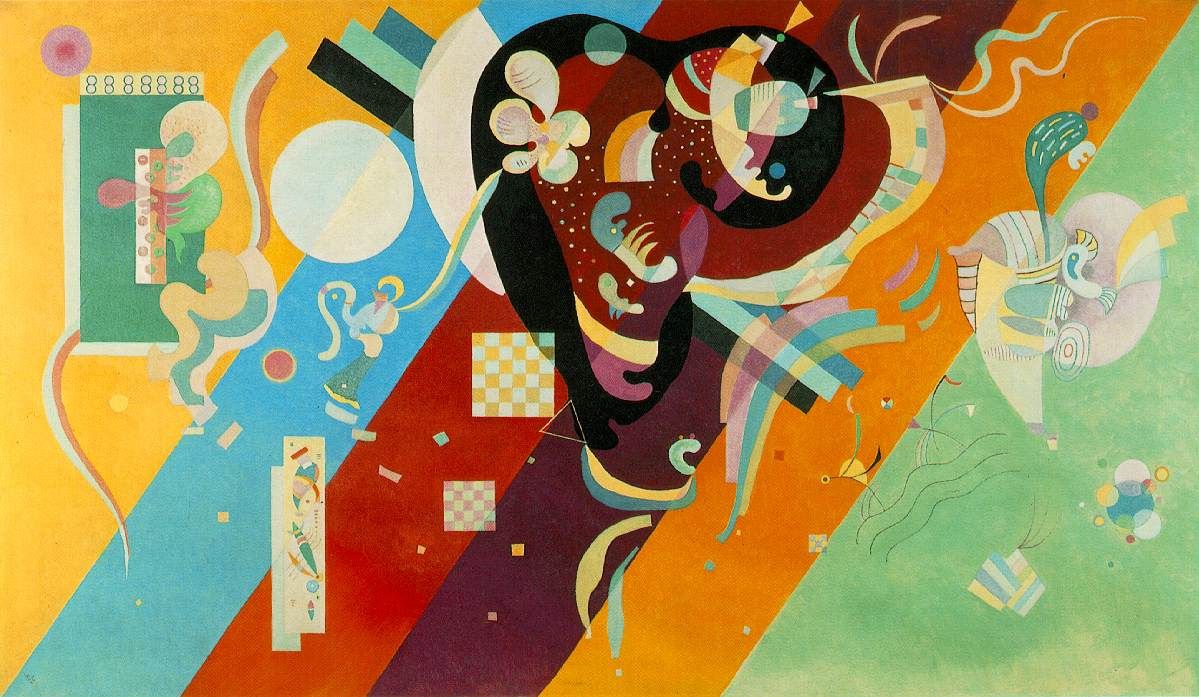
Wassily Kandinsky wrote to Arnold Schoenberg in 1911 that he sought the "autonomous paths" and "lives" of musical voices "in pictorial form." Some art historians have chalked up Kandinsky's intense connection between sound and color to synesthesia, a rare neurological phenomenon linking sensory inputs such as colors and sounds, though Kandinsky didn't have an official diagnosis. Kandinsky's view of music and visual art was that "painting could develop the same powers that music possessed." Over time, he explored shapes and colors on his canvases without attaching them to objects or traditional scenes.
- WatchRhythm in Visual Composition · YouTube · 11 min watch
Repetition, symmetry and syncopation give a picture its rhythm. Visual rhythm is the counterpart to musical rhythm: a pulse over time in music, a pattern arranged across the frame in a picture.
- BookWays of Seeing · Bookshop.org
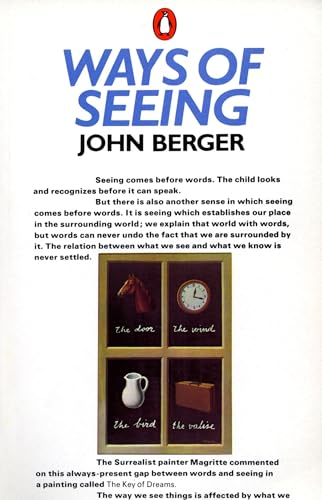
Ways of Seeing by John Berger describes how art reveals the social and political systems in which it was made, and raises questions about hidden ideologies in visual images, including the male gaze in European painting.


Book links are Bookshop.org affiliate links. Curiate may earn a commission on purchases, at no extra cost to you — Bookshop.org also gives a share to independent bookshops.
Reading paths, built to arrive somewhere
Curiate turns what you are curious about into a short path — a quick lesson on an article, something to watch, and a book to go deep on. Free to browse.