Philosophy of language in shared life
Philosophy of language, or sometimes linguistic philosophy, is the study of the nature of language. How do shared practices and contexts shape meaning and relationships? By the end, readers will understand how language works through social life, interpretation, and the practices that make meaning intelligible.
2 articles, 1 book
The reading path
- Readphilosophy of language · Wikipedia
Symbolic interactionism holds that social organization is based almost entirely on meanings, so explanations of institutions need to account for the shared meanings that create and sustain them. Rhetoric studies how particular words achieve emotional and rational effects; examining how swearing and pejoratives influence others' behavior and define relationships shows language at work in shared life. Medieval scholastics analyzed words such as "and," "or," and "every" in relation to their use, and developed the doctrine of suppositio, the interpretation of a term in context. A term could refer to its usual non-linguistic referent, as in "Charles is a man," or to itself as a linguistic entity, as in "'Charles' has seven letters"; this anticipates the distinction between using a word and mentioning it, and between language and metalanguage.
- BookPhilosophical Investigations · Bookshop.org
Ludwig Wittgenstein, a philosopher, argues that a language whose signs refer to sensations inaccessible to others would also be unintelligible to its originator, who could not establish their meanings. He connects language to shared life: itching, for example, gets its identity from a sharable practice of expression, reaction and language use; naming a sensation requires a place for the word-a notion of sensation.
- ReadPrivate Language (Stanford Encyclopedia of Philosophy/Spring 2008 Edition) · plato.stanford.edu
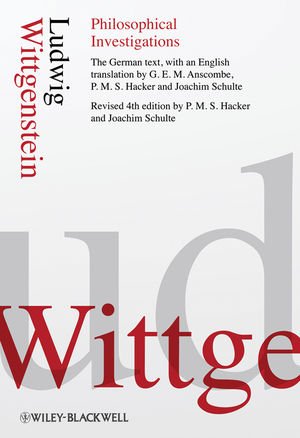
Philosophical Investigations by Ludwig Wittgenstein discusses language games and how speaking is part of an activity or form of life, giving readers a concrete way to consider language in use.

Book links are Bookshop.org affiliate links. Curiate may earn a commission on purchases, at no extra cost to you — Bookshop.org also gives a share to independent bookshops.
Reading paths, built to arrive somewhere
Curiate turns what you are curious about into a short path — a quick lesson on an article, something to watch, and a book to go deep on. Free to browse.