Natural language processing and language patterns
Natural language processing (NLP) is the processing of natural language information by a computer and a subfield of computer science closely associated with artificial intelligence. How do computers use rules and word patterns to process text? By the end, you'll understand how language data is prepared and modeled, and how the steps can vary with the task.
2 articles, 1 book
The reading path
- Readnatural language processing · Wikipedia
ELIZA, a simulation of Rogerian psychotherapy, produced interactions that appeared human-like despite using minimal information about human thought or emotion. When a "patient" exceeded its very small knowledge base, ELIZA might respond to "My head hurts" with "Why do you say your head hurts?", an example of a system applying rules to language data. Turkish and Meitei words can have thousands of possible forms per dictionary entry, so modeling each form separately is not possible. NLP handles word patterns through different strategies: lemmatization maps words to dictionary forms, while stemming uses rules to reduce forms such as "closed" and "closing" to "close".
- Read"What is Natural Language Processing? Intro to NLP in Machine Learning" · gyansetu.in
NLP turns raw text into a form for feature extraction, then extracts features suited to the task and model before modeling. This process sometimes isn't linear and may require additional steps.
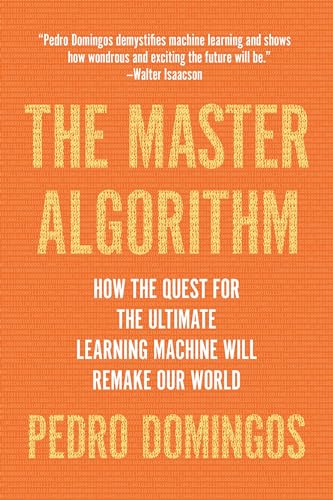
- BookThe Master Algorithm · Bookshop.org
The Master Algorithm by Pedro Domingos assembles a blueprint for a future universal learner, the Master Algorithm, and discusses what it will mean for business, science, and society.

Book links are Bookshop.org affiliate links. Curiate may earn a commission on purchases, at no extra cost to you — Bookshop.org also gives a share to independent bookshops.
Reading paths, built to arrive somewhere
Curiate turns what you are curious about into a short path — a quick lesson on an article, something to watch, and a book to go deep on. Free to browse.