Quantum computing and algorithmic speedups
Quantum computing represents and processes information using quantum states, exploiting phenomena such as superposition, interference, and entanglement. How can quantum algorithms promise speedups, and what will those gains mean for understanding which calculations quantum computers may handle faster? The lessons connect algorithmic speedups with the broader question of how quantum and classical approaches compare.
2 articles, 1 book
The reading path
- Readquantum computing · Wikipedia
In June 2023, IBM computer scientists reported that a quantum computer produced better results for a physics problem than a conventional supercomputer. Quantum simulation may help with quantum systems that are impossible to efficiently simulate classically, though useful implementations remain hardware-limited; it might also help improve the energy efficiency of nitrogen fixation, which uses about 2% of the annual global energy output. Grover's algorithm can search an unstructured list in a number of database queries that scales as the square root of its size, rather than the linear scaling of classical algorithms. A password cracker that guesses passwords is one possible application of this speedup.
- ReadWhat Is the True Promise of Quantum Computing? | Quanta Magazine · Quanta Magazine
Low-rank structure is when a user's preferences can be explained with only a few pieces of information. Ewin Tang, a teenager who rose to prominence in the field, found a classical approach that could match quantum algorithms' claimed exponential speedup for recommendation problems, helping launch "dequantizing."
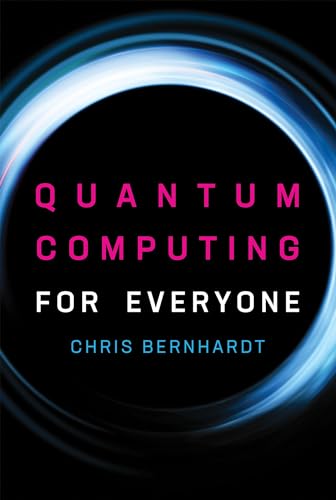
- BookQuantum Computing for Everyone · Bookshop.org
Quantum Computing for Everyone by Chris Bernhardt explains quantum computing using only high school mathematics, covering quantum teleportation, superdense coding, error correction, and quantum algorithms. Bernhardt's account gives readers a way to learn both the mathematical foundations and concrete techniques.


Book links are Bookshop.org affiliate links. Curiate may earn a commission on purchases, at no extra cost to you — Bookshop.org also gives a share to independent bookshops.
Reading paths, built to arrive somewhere
Curiate turns what you are curious about into a short path — a quick lesson on an article, something to watch, and a book to go deep on. Free to browse.