The decline of the coal industry in Appalachia and its human toll
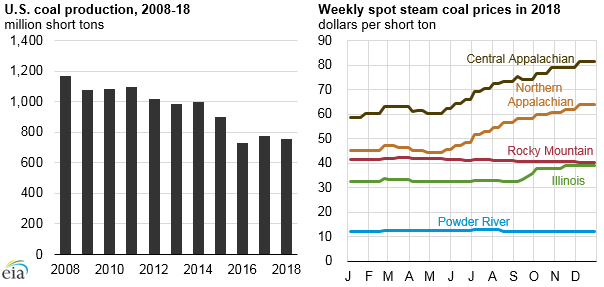
The decline of the coal industry in Appalachia is part of a U.S. coal industry in transition, with production in 2023 down about 50% from its 2008 peak of 1,171.8 million short tons (1,063 million metric tons).
2 articles, 1 book · about 22 min of reading and viewing
The reading path
- Readthe decline of the coal industry in appalachia · Wikipedia · 20 min read
When mountaintop removal mining is used, miners and people living in the regions develop health issues. Overburden removed from mountains is dumped into valleys, creating toxic runoff that often pollutes streams used for local water sources or groundwater and wells. Coal mining employment declined as mechanization improved productivity, even while coal production increased. The average number of coal mining employees fell to 41,600 in 2020, below the previous low of 70,000 in 2003 and the lowest number of US coal miners in at least 125 years. Perdue and Pavela, authors of "Addictive Economies and Coal Dependency," found that communities with no mining had lower levels of poverty than communities with mining, amid evidence that heavily coal dependent communities suffered in their mental and emotional health. They blamed this on the fact that "dependency on natural resources resulted in stifled development and negative socioeconomic outcomes."
- Read"In 2018, U.S. coal production declined as exports and Appalachian region prices rose – Today in Energy – U.S. Energy Information Administration (EIA)" · eia.gov · 2 min read
U.S. coal exports increased by about 10 MMst in 2018, but not enough to offset the decline in U.S. coal consumption, resulting in declining coal production. EIA estimates that total 2018 U.S. coal production was 755 million short tons (MMst), 20 MMst less than in 2017 and 36% less than in the previous decade.
- BookThe Coal Tattoo · Bookshop.org
The Coal Tattoo by Silas House describes two sisters raising themselves in a small coal-mining town, with contrasting commitments to tradition and a fast, untamable life.


Book links are Bookshop.org affiliate links. Curiate may earn a commission on purchases, at no extra cost to you — Bookshop.org also gives a share to independent bookshops.
Reading paths, built to arrive somewhere
Curiate turns what you are curious about into a short path — a quick lesson on an article, something to watch, and a book to go deep on. Free to browse.