The history of architecture across traditions and regions
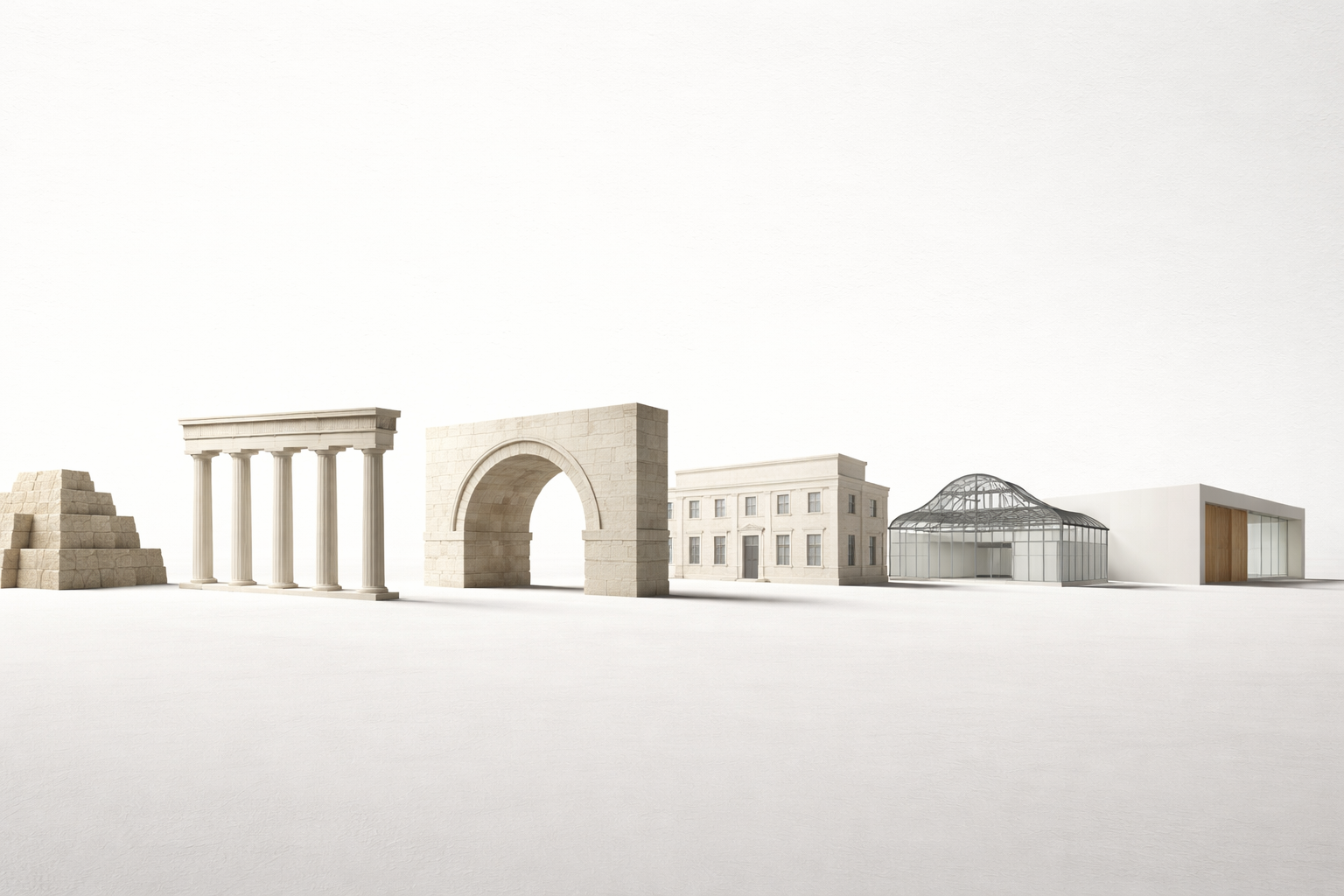
The history of architecture traces how building traditions change across regions, styles, and time, with their beginnings thought to lie in people's need for shelter and protection. The lessons help readers understand how architectural development can be considered across different societies without reducing it to one timeline or standard. They connect building traditions with the varied needs and organization of human communities.
2 articles, 1 book
The reading path
- Readthe history of architecture · Wikipedia
Near Wadi Halfa, Sudan, the Arkin 8 site contains 100,000 year old circles of sandstone that were likely the anchor stones for tents, an example of how shelter-building traditions trace the history of architecture. Because shelters from this time were perishable, evidence is difficult to find; where bone, especially mammoth bone, is viable, structures preserve more easily, including mammoth-bone dwellings at Mezhirich 15,000 years ago. The Pantheon in Rome is the largest surviving Roman dome and has a large oculus at its centre. Roman architecture drew on Greek and Etruscan styles and influenced architects around the world for centuries through De architectura, a major treatise published between 30 and 15 BC by the architect and engineer Marcus Vitruvius Pollio.
- ReadIntroduction to History of Architecture: Key Eras and Shifts · architecturecourses.org
Great Zimbabwe's large dry-stone walls were built without mortar, using carefully selected and placed stone. The example shows why architectural history cannot be treated as one world timeline: traditions developed in different places, often at the same time, and construction skill should not be judged by whether a building uses modern-looking technology. Organized streets and sophisticated drainage in the Indus region also show that settlement-building involved more than erecting monuments.
- BookThe Fountainhead · Bookshop.org
The Fountainhead by Ayn Rand tells the story of young architect Howard Roark and the denunciation he faces from an enraged society, bringing an architect's integrity and society's response to creation into view.


Book links are Bookshop.org affiliate links. Curiate may earn a commission on purchases, at no extra cost to you — Bookshop.org also gives a share to independent bookshops.
Reading paths, built to arrive somewhere
Curiate turns what you are curious about into a short path — a quick lesson on an article, something to watch, and a book to go deep on. Free to browse.