The history of environmental movements across countries and causes
The history of environmental movements is the history of a social movement that seeks to protect the natural world from harmful practices and support sustainable living. The lessons answer how environmental movements have connected environmental protection with concerns about work, health, development, and energy. They trace these connections across different countries and forms of activism.
2 articles, 1 book
The reading path
- Readthe history of environmental movements · Wikipedia
South Korea and Taiwan saw spontaneous, cross-class environmental movements whose demands connected pollution with employment, occupational health, and agricultural crisis. Their militant protests won new restrictions on toxins, industrial waste, and air pollution, but those regulations also drove polluting industries from South Korea and Taiwan to China and other countries in Southeast Asia with more relaxed environmental laws. After the Three Mile Island accident in 1979, many mass demonstrations took place against nuclear technologies. The largest was held in New York City in September 1979 and involved 200,000 people. The Bhopal gas leakage on 3 December 1984 released 40 tons of methyl isocyanate, immediately killing 2,259 people and ultimately affecting 700,000 citizens. Alongside this disaster, the anti-dam movement is described as the most influential part of India's environmental movement, challenging a development vision built around giant dams and power plants.
- BookSilent Spring · Bookshop.org
Twenty million Americans took to the streets for the first Earth Day on April 22, 1970, after Senator Gaylord Nelson, California Republican Pete McCloskey, and Denis Hayes, a young Harvard graduate, organized it. The demonstration drove a bipartisan push for environmental protection, and Congress passed more environmental legislation than at any point in U.S. history.
- ReadPower and Purpose on Earth Day | Council on Foreign Relations · cfr.org
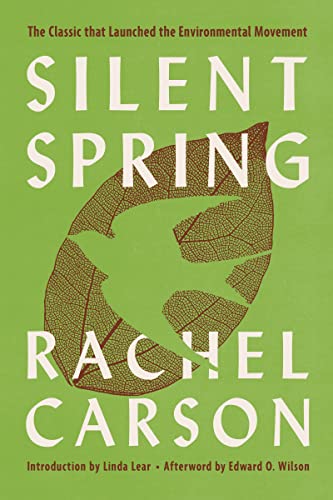
Silent Spring is an environmental science book by Rachel Carson. Published on September 27, 1962, the book documented the environmental harm caused by the indiscriminate use of DDT, a pesticide used by soldiers during World War II.

Book links are Bookshop.org affiliate links. Curiate may earn a commission on purchases, at no extra cost to you — Bookshop.org also gives a share to independent bookshops.
Reading paths, built to arrive somewhere
Curiate turns what you are curious about into a short path — a quick lesson on an article, something to watch, and a book to go deep on. Free to browse.