The Korean community in Japan and belonging
The Korean community in Japan is the second largest ethnic minority group in Japan after Chinese immigrants. How have exclusion and changing rules shaped Korean identity and belonging in Japan? By the end, readers will understand how legal status, names, and collective action have shaped the community's experiences of inclusion and exclusion.
3 articles, 1 book
The reading path
- Readthe korean community in japan · Wikipedia
In 1910, Japan annexed Korea, and all Korean people became part of the Empire of Japan by law and received Japanese citizenship. Yet open discrimination curtailed Koreans' jobs in Japan, largely limiting them to physical labor and work alongside other discriminated-against groups, including burakumin-showing how legal inclusion coexisted with exclusion. A 1986 survey found that over 90% of ethnic Koreans in Japan reported having a Japanese-sounding name in addition to a Korean one. In a 1998 study, 80% said they used Japanese names when in Japanese company, and 30% used them "almost exclusively," showing how identity and belonging could involve using different names in different settings.
- Read"FSI -Koreans in Japan" · fsi.stanford.edu
After World War II, Japan defined ethnic Koreans as foreigners, and they lost voting rights by December 1945. The 1947 Alien Registration Law assigned them alien status, the 1950 Nationality Law stripped Zainichi children with Japanese mothers of Japanese nationality, and former colonial subjects whose homelands Japan did not recognize as legitimate nation-states were rendered stateless as of 1952.
- Read"FSI | SPICE – Koreans in Japan" · spice.fsi.stanford.edu
Until the late 1980s, naturalization required Zainichi to adopt Japanese-sounding names, names that sounded Japanese, and comply with household registration. Naturalization was considered taboo among Zainichi, and it did not guarantee protection from anti-Korean discrimination; in the 1970s, ethnic mobilization included an anti-fingerprinting movement and a "real-name" initiative asserting naturalized Koreans' ethnicity.
- BookPachinko · Bookshop.org
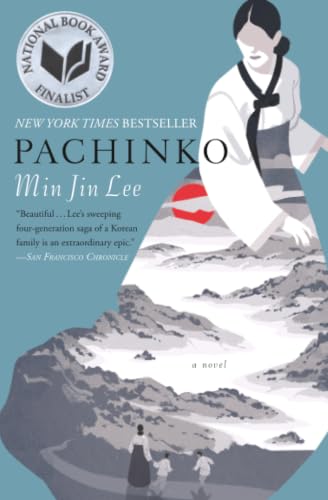
Pachinko by Min Jin Lee follows Sunja and her family from early 1900s Korea to Japan, describing their exile, struggles, and triumphs as they face questions of faith, family, and identity. Their story gives readers a way to consider how these questions shape life across generations in the Korean community in Japan.

Book links are Bookshop.org affiliate links. Curiate may earn a commission on purchases, at no extra cost to you — Bookshop.org also gives a share to independent bookshops.
Reading paths, built to arrive somewhere
Curiate turns what you are curious about into a short path — a quick lesson on an article, something to watch, and a book to go deep on. Free to browse.