The psychology of creativity and how it works
The psychology of creativity studies how people produce something original and worthwhile, and how creativity differs from IQ type intelligence. The lessons answer how creativity works, develops, and can be understood across everyday expression and professional achievement. They connect creative thinking with problem solving, experience, emotion, and the shifting mental processes involved in making and refining ideas.
2 articles, 1 book
The reading path
- Readthe psychology of creativity · Wikipedia
The four-C model ranges from mini-c, personally meaningful interpretations of experiences, to Big-C creativity considered great in a field. Psychologists James Kaufman and Ronald Beghetto argued that it also provides a useful framework for analyzing creative processes in individuals, while distinguishing everyday problem-solving and creative expression from professional creativity and field-level achievement. Incubation is a temporary break from creative problem-solving that can result in insight. Some empirical evidence is consistent with the hypothesis that incubation enables "forgetting" of misleading clues, while its absence may lead problem solvers to become fixated on inappropriate strategies. A synthesis of 84 studies found that complex training courses, meditation, and cultural exposure were most effective in enhancing creativity, while cognitive-manipulation drugs were noneffective. The finding suggests that creativity can be fostered through varied forms of training and experience.
- ReadTen Habits of Highly Creative People · Greater Good Magazine
Creativity draws on the whole brain: interacting cognitive systems and emotions work together, rather than a single "creative" region. Brain scans of people creating showed imagination and motivation highly active during initial absorption, then more executive attention as they refined their work; creative people flexibly shift between these networks and between deliberate and spontaneous thought.
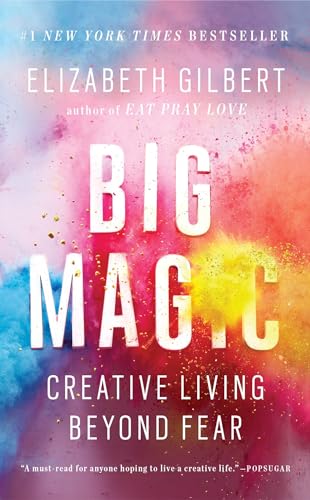
- BookBig Magic: Creative Living Beyond Fear · Bookshop.org
Big Magic by Elizabeth Gilbert offers insights into the mysterious nature of inspiration and how it relates to creativity, giving readers a way to consider inspiration's role in creative work.


Book links are Bookshop.org affiliate links. Curiate may earn a commission on purchases, at no extra cost to you — Bookshop.org also gives a share to independent bookshops.
Reading paths, built to arrive somewhere
Curiate turns what you are curious about into a short path — a quick lesson on an article, something to watch, and a book to go deep on. Free to browse.