The U.S. suffrage movement and the fight for the vote
The suffrage movement in the United States sought women's right to vote, a demand that gained strength in the 1840s as part of the broader movement for women's rights, and was established nationally in 1920. What shaped the long fight for women's voting rights, and how did organizing and strategic disagreements influence its course? The lessons trace efforts to build support and secure political change.
2 articles, 1 book
The reading path
- Readthe suffrage movement in the united states · Wikipedia
At the Seneca Falls Convention, held on July 19 and 20, 1848, Elizabeth Cady Stanton, a social activist who came from a family deeply involved in politics, introduced the resolution demanding women's right to vote. The resolution was the convention's only resolution not adopted unanimously, and it passed only after abolitionist leader Frederick Douglass, a former slave, strongly supported it. New York State's 1917 referendum in favor of suffrage proved decisive for President Woodrow Wilson. Historian Behn argues that the National American Woman Suffrage Association's approach was decisive in Wilson's conversion to the federal amendment; the amendment fell two votes short in the Senate on September 30, 1918, then passed the House on May 21, 1919, by 42 votes more than necessary. Tennessee narrowly ratified it on August 18, 1920. New Jersey's 1776 constitution enfranchised adult inhabitants who owned a specified amount of property, and women regularly voted under laws enacted in 1790 and 1797. A 1807 law excluded women there, but Kentucky passed a statewide woman suffrage law in 1838 for certain widows and unmarried women who met age, residence, and property requirements; these partial rights were not expressed as for whites only.
- BookThe Woman's Hour: The Great Fight to Win the Vote · Bookshop.org
The National American Woman Suffrage Association, formed when two groups merged in 1890, was a women's suffrage organization. In 1916, its president Carrie Chapman Catt unveiled what she called a "Winning Plan" to mobilize state and local suffrage organizations, while Alice Paul's National Woman's Party used hunger strikes and White House pickets.
- ReadWomen's Suffrage: U.S. Movement, Leaders & 19th Amendment | HISTORY · HISTORY
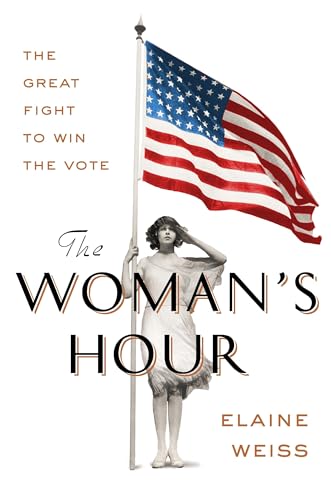
The Woman's Hour, by Elaine Weiss, focuses on women's suffrage in the United States. The available article does not identify a chapter or section on the topic, so it cannot support a more specific account of what the book teaches.


Book links are Bookshop.org affiliate links. Curiate may earn a commission on purchases, at no extra cost to you — Bookshop.org also gives a share to independent bookshops.
Reading paths, built to arrive somewhere
Curiate turns what you are curious about into a short path — a quick lesson on an article, something to watch, and a book to go deep on. Free to browse.