Turing's test and claims about machine intelligence
The development of artificial intelligence in the 1950s was the founding of the field of research that eventually evolved into what is widely described as artificial intelligence. It began at a workshop held on the campus of Dartmouth College in 1956, where Allen Newell and Herbert A. Simon, with help from J. C. Shaw, presented a concept of the first AI program, Logic Theorist.
2 articles, 1 book · about 2 hr of reading and viewing
The reading path
- Readthe development of artificial intelligence in the 1950s · Wikipedia · 60+ min read
Alan Turing, a researcher into machine intelligence, published "Computing Machinery and Intelligence" in 1950 and proposed judging machine intelligence by whether a machine could hold a conversation indistinguishable from one with a human. He argued that a "thinking machine" could be plausible. Walter Pitts and Warren McCulloch analyzed networks of idealized artificial neurons and showed how they might perform simple logical functions in 1943. Their work inspired Marvin Minsky, who later built the neural net machine SNARC with Dean Edmonds in 1951. Arthur Samuel's checkers program, described in his 1959 paper "Some Studies in Machine Learning Using the Game of Checkers", eventually achieved sufficient skill to challenge a respectable amateur. The program was among the first uses of what would later be called machine learning.
- ReadPassing the Turing Test Does Not Mean the End of Humanity - PMC · pmc.ncbi.nlm.nih.gov · 34 min read
The Turing test is Turing's imitation game, a test of whether a machine can "think." The authors argue that passing the Turing test does not establish that machines have human-like or human-level intelligence.
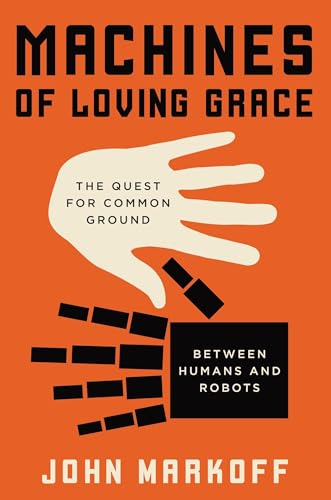
- BookMachines of Loving Grace: The Quest for Common Ground Between Humans and Robots · Bookshop.org
Machines of Loving Grace by John Markoff chronicles automation from the birth of the artificial intelligence and intelligence augmentation communities in the 1950s to the modern day, tracing how developers addressed the relationship between humans and computers and urging them to consider the consequences of their work.

Book links are Bookshop.org affiliate links. Curiate may earn a commission on purchases, at no extra cost to you — Bookshop.org also gives a share to independent bookshops.
Reading paths, built to arrive somewhere
Curiate turns what you are curious about into a short path — a quick lesson on an article, something to watch, and a book to go deep on. Free to browse.