Why people agree to authority in social contract theory
Social contract theory says a legitimate state arises when citizens agree to surrender some freedoms in exchange for protection of their remaining rights or maintenance of social order, and Jean-Jacques Rousseau published The Social Contract in 1762. The lessons answer why people agree to political authority and help readers understand how rational agreement can justify social rules.
2 articles, 1 video, 1 book · about 1 hr 25 min of reading and viewing
The reading path
- Readsocial contract theory · Wikipedia · 31 min read
In Hobbes's account, the state of nature is a hypothetical, anarchic condition without a sovereign ruler. Individuals in it cede some rights in exchange for others ceding theirs, agreeing not to use force against one another; this social contract irrevocably creates a sovereign state to make laws, regulate social interactions, and prevent violent conflicts. Rousseau's social contract theory makes the general will, the citizens' collective interest, the sovereign and sole legislator, rejecting representative government. Rousseau believed the contract works when individuals forfeit their rights to the whole, making conditions "equal for all" and each member "an indivisible part of the whole".
- Read"Social Contract Theory" · iep.utm.edu · 46 min read
Hobbes's social contract theory starts from a State of Nature where people are naturally and exclusively self-interested, roughly equal, faced with limited resources, and without a power to force cooperation. Hobbes concludes that these conditions would make the State of Nature unbearably brutal.
- WatchThe social contract | Foundations of American democracy | US government and civics | Khan Academy · YouTube · 8 min watch
In Leviathan, Thomas Hobbes gives an account of the social contract, the idea that people agree to submit to authority.
- BookThe Social Contract · Bookshop.org
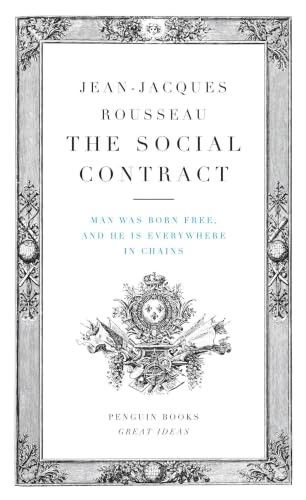
The Social Contract by Jean-Jacques Rousseau argues that sovereign power should come from a pact among a state's citizens, not from anyone's natural right to rule others. Rousseau then considers how liberty, law, freedom, and justice follow from this premise.


Book links are Bookshop.org affiliate links. Curiate may earn a commission on purchases, at no extra cost to you — Bookshop.org also gives a share to independent bookshops.
Reading paths, built to arrive somewhere
Curiate turns what you are curious about into a short path — a quick lesson on an article, something to watch, and a book to go deep on. Free to browse.