How information becomes computation in computer science
Computer science is the study of computation, information, and automation, and of what can and cannot be automated. The lessons answer how information becomes computation and help readers understand what computation can do and what it requires. They connect ideas about information, logic, and the levels at which instructions are carried out.
3 articles, 1 video, 1 book · about 2 hr 19 min of reading and viewing
The reading path
- Readcomputer science · Wikipedia · 29 min read
Imperative programming is a computer science paradigm that uses statements to change a program's state. Like commands in natural language, an imperative program consists of commands for the computer to perform. Claude Shannon developed information theory, closely related to probability and statistics, to find fundamental limits on compressing data and reliably storing and communicating it. Coding theory studies codes, systems for converting information from one form to another, to design efficient and reliable data transmission methods. In computer science, Ada Lovelace wrote an algorithm to compute the Bernoulli numbers in a note she included while translating a French article on the Analytical Engine in 1843; it is considered the first published algorithm ever specifically tailored for implementation on a computer.
- ReadThe physics of novel computation: beyond bits and chips to spikes and spins · Physics World · 14 min read
CMOS is a type of integrated circuit. Computer science's binary logic was mathematically formalized by US mathematician Claude Shannon. In 1937, he showed that on/off electrical switches arranged in logic gates can carry out arithmetic and logical decision-making; modern CMOS chips use femtojoules for a transistor's binary switching event, down from nanojoules for an older discrete transistor.
- Read"The Philosophy of Computer Science" · plato.stanford.edu · 60+ min read
In computer science, a compiler translates high-level language instructions into assembly code, which is then assembled into machine code operations executable by a processor. The execution level is the physical level of the computer architecture running the instructions.
- WatchAlgorithms and selection | Intro to CS - Python | Khan Academy · YouTube · 4 min watch
Algorithms help plan programs, and approaches can be judged for correctness, efficiency and readability. Selection lets an algorithm branch its control flow in response to new information.
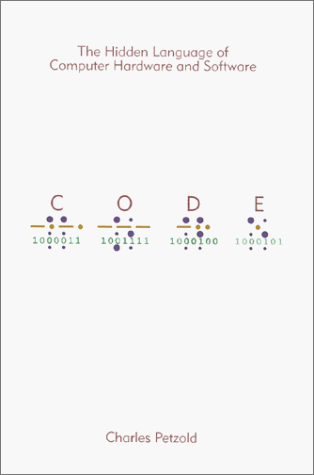
- BookCode: The Hidden Language of Computer Hardware and Software · Bookshop.org
Code by Charles Petzold teaches how personal computers work at the hardware and software level, starting with Morse code, Braille, and Boolean logic to explain vacuum tubes, transistors, and integrated circuits. Petzold's main hope was to give readers a "really good feeling for what a bit is, and how bits are combined to convey information".



Book links are Bookshop.org affiliate links. Curiate may earn a commission on purchases, at no extra cost to you — Bookshop.org also gives a share to independent bookshops.
Reading paths, built to arrive somewhere
Curiate turns what you are curious about into a short path — a quick lesson on an article, something to watch, and a book to go deep on. Free to browse.