How machines learn language patterns in natural language processing
Natural language processing is how a computer processes information in everyday language, through tasks such as recognizing speech, classifying text, understanding language, and generating it. The lessons answer how machines learn patterns in language and help readers understand how those patterns support processing and prediction. They connect language data, learning methods, and the steps involved in working with text.
2 articles, 1 video, 1 book · about 48 min of reading and viewing
The reading path
- Readnatural language processing · Wikipedia · 27 min read
IBM alignment models were developed from a probabilistic approach to translation by an IBM team including Frederick Jelinek, Peter F. Brown, and Robert Mercer, using parallel English and French text from the proceedings of the Parliament of Canada. Such systems often depended on large task-specific corpora, making suitable training data, the examples used to teach a system, an important limitation. George Lakoff offers a natural language processing methodology based on cognitive science and cognitive linguistics, applying conceptual metaphor, the understanding of one idea in terms of another, to infer an author's intent. Without additional information, the intent behind "She is a big person" remains somewhat ambiguous to a person and a cognitive NLP algorithm alike. Tokenization divides text into words or word fragments, which become numerical tokens used in deep learning methods. English words are usually separated by spaces, but some written languages like Chinese, Japanese and Thai do not mark word boundaries, making text segmentation a significant task requiring knowledge of the vocabulary and morphology of words in the language.
- Read"What is Natural Language Processing? Intro to NLP in Machine Learning" · gyansetu.in · 8 min read
Natural language processing models are fitted to training data and then used to make predictions on unseen data. The pipeline may require additional steps and isn't always linear.
- WatchNatural Language Processing: Crash Course AI #7 · YouTube · 13 min watch
The Crash Course AI video covers how computers can better understand language, including strategies like distributional semantics, and introduces recurrent neural networks to build sentences. It connects language processing to how people use computers to search, set alarms, check the weather, and communicate across language barriers.
- BookThe Master Algorithm · Bookshop.org
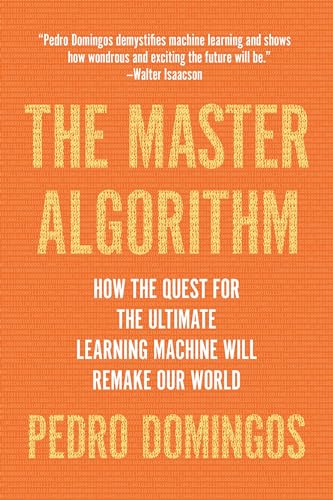
The Master Algorithm by Pedro Domingos assembles a blueprint for the future universal learner, the Master Algorithm, and discusses what it will mean for business, science, and society.

Book links are Bookshop.org affiliate links. Curiate may earn a commission on purchases, at no extra cost to you — Bookshop.org also gives a share to independent bookshops.
Reading paths, built to arrive somewhere
Curiate turns what you are curious about into a short path — a quick lesson on an article, something to watch, and a book to go deep on. Free to browse.