How mobile money supports financial inclusion
The development of mobile payment solutions in emerging markets concerns payment processing services operated under financial regulations and performed from or via a mobile device; in a developing country, these solutions can extend financial institutions' services to the "unbanked" or "underbanked."
2 articles, 1 video, 1 book · about 28 min of reading and viewing
The reading path
- Readthe development of mobile payment solutions in emerging markets · Wikipedia · 21 min read
Unified Payments Interface is a direct bank transfer system in India that lets users send money to other users and businesses in real-time from their bank accounts, linking mobile payments with bank transfers. In the development of mobile payment solutions in emerging markets, T-Cash uses the mobile phone and phone carrier as the front-end interface to consumers. Consumers can purchase goods, transfer money to a peer, cash out, and cash in. Consumers use mobile billing at e-commerce checkout, such as an online gaming site. After two-factor authentication with a mobile number and a PIN or one-time password (often abbreviated as OTP), the consumer's mobile account is charged for the purchase.
- ReadA new kind of no-frills bank could kickstart India's long-awaited mobile money revolution · Quartz · 2 min read
Payments banks could let India's unbanked poor open accounts and store money electronically. At least a quarter of their access points must be in rural locations with a population of fewer than 10,000 people.
- WatchPREVIEW:The Future of the Digital Payments Rail (w/ Raoul Pal & Nitya Sharma) · YouTube · 5 min watch
Nitya Sharma, founder and CEO of Simpl Inc., and Raoul Pal discuss India's expanding electronic payments system, including India Stack, UPI, and Simpl's digital version of informal credit.
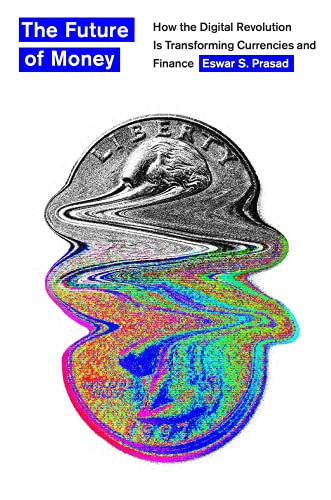
- BookThe Future of Money: How the Digital Revolution is Transforming Currencies and Finance · Bookshop.org
The Future of Money by Eswar Prasad examines how digital technology, including cryptocurrencies, distributed ledgers, and global networking, is changing money, banking, and finance.


Book links are Bookshop.org affiliate links. Curiate may earn a commission on purchases, at no extra cost to you — Bookshop.org also gives a share to independent bookshops.
Reading paths, built to arrive somewhere
Curiate turns what you are curious about into a short path — a quick lesson on an article, something to watch, and a book to go deep on. Free to browse.