How music therapy engages the brain
Music therapy uses music in a clinical setting to accomplish therapeutic goals, addressing client needs through music-based experiences. How does music engage the brain, and what can understanding this help us make sense of in therapeutic practice? The lessons connect music-making and listening with the brain's responses, showing how these responses relate to communication, behavior, mood, and recovery.
2 articles, 1 book · about 1 hr 16 min of reading and viewing
The reading path
- Readmusic therapy · Wikipedia · 60+ min read
Music therapy may benefit the family as a whole: some family members of children with autism claim that sessions have allowed their child to interact more with the family and the world. Music therapy has two fundamental types: receptive music therapy and active music therapy, also known as expressive music therapy. Active music therapy engages clients or patients in making music, while receptive music therapy guides them in listening or responding to live or recorded music. Music therapy for premature infants in the neonatal intensive care unit aims to mask unwanted auditory stimuli, stimulate infant development, and promote a calm environment for families. Although no adverse effects are reported, evidence of benefit is weak because many clinical trials had mixed results or were poorly designed.
- ReadMaking Music May Rewire the Addicted Brain · Neuroscience News · 5 min read
Music engages many of the same dopaminergic reward hubs as substance use disorders, triggering acute euphoric states, mood elevation, and emotional catharsis without toxic pharmacological side effects. Substance use disorders hijack the brain's meso-corticolimbic dopamine pathway, entraining neural circuits to seek compulsive reinforcement while blunting natural reward sensitivity.
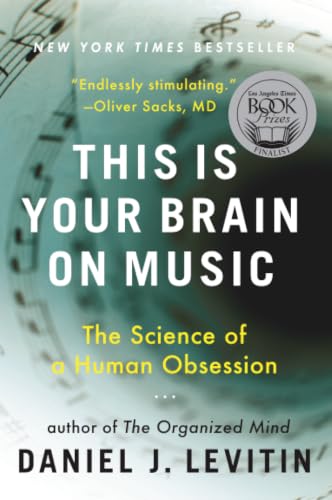
- BookThis Is Your Brain on Music: The Science of a Human Obsession · Bookshop.org
This Is Your Brain on Music by the McGill University neuroscientist Daniel J. Levitin, first published by Dutton Penguin in the U.S. and Canada in 2006, explores the science of how people respond to music.

Book links are Bookshop.org affiliate links. Curiate may earn a commission on purchases, at no extra cost to you — Bookshop.org also gives a share to independent bookshops.
Reading paths, built to arrive somewhere
Curiate turns what you are curious about into a short path — a quick lesson on an article, something to watch, and a book to go deep on. Free to browse.