How the daguerreotype made portraits accessible
Introduced worldwide by Louis Daguerre in 1839, the daguerreotype was the first publicly available photographic process, making portraits accessible to more people. The lessons answer how photography made portraits easier to obtain and what this meant for society. They follow the changing reach of portraiture and its place in everyday life.
2 articles, 1 video · about 1 hr 9 min of reading and viewing
The reading path
- Readthe impact of the daguerreotype on 19th-century society · Wikipedia · 56 min read
The daguerreotype's impact on 19th-century society included a flourishing portrait market, predominantly the work of itinerant practitioners who traveled from town to town. For the first time in history, people could obtain an exact likeness of themselves or their loved ones for a modest cost, making portrait photographs extremely popular with those of modest means. In 1841, Professor Petzval and the Voigtländer firm designed a faster lens that reduced daguerreotype portrait exposure times, helping make photographic portraits more practical. Daguerreotypes' impact on 19th-century society included portraits that could be sheared from their thin, soft-metal sheets into sizes and shapes for mounting in lockets, as miniature paintings were. They were also mounted in watch fobs and cases, jewel caskets, walking-stick handles, and jewelry.
- ReadTake a Look at the 'Extraordinary' 19th-Century Portraits Made With Some of the Earliest Methods of Photography · Smithsonian Science · 4 min read
Daguerreotyping's impact on 19th-century society included a high-end photographic business: silver-clad plates had to be manufactured in France and shipped to the United States. Art historian Douglas Nickel says this required "a certain amount of capital" to enter the business, which is why there were "some very high-end studios" and "often very artistic-looking results."
- WatchConserving one of the oldest photographs in MoMA's collection | CONSERVATION STORIES · YouTube · 9 min watch
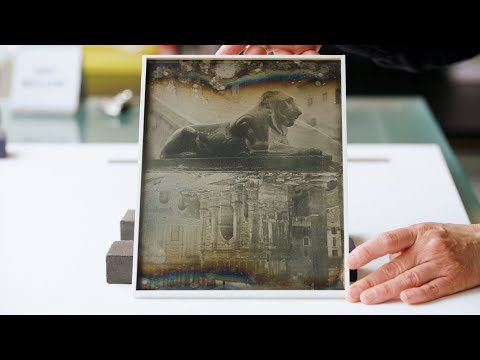
Lee Ann Daffner, MoMA's Andrew W. Mellon Foundation Conservator, explores the sensitive chemistry of removing tarnish from an 1842 daguerreotype. The video relates this conservation work to early daguerreotypes, unique images made directly on silver plates with no convenient method of replication.


Book links are Bookshop.org affiliate links. Curiate may earn a commission on purchases, at no extra cost to you — Bookshop.org also gives a share to independent bookshops.
Reading paths, built to arrive somewhere
Curiate turns what you are curious about into a short path — a quick lesson on an article, something to watch, and a book to go deep on. Free to browse.