Public education and racial inequality in the United States
The development of public education in the United States is the history of schooling that was segregated, or even only available, based upon race. How did public schooling reflect and shape racial inequality? By the end, readers will understand how access, resources, and the promise of equal education changed over time.
2 articles, 1 book
The reading path
- ReadHistory of education in the United States · Wikipedia
After 1811, South Carolina opened "free schools" where white children could learn literacy and basic math at public expense. During Reconstruction, public schools supported by general taxes educated both whites and blacks, but legislators agreed on racially segregated schools; white Democrats later underfunded public schools for blacks, a pattern that continued until the 1940s. By the end of 1865, more than 90,000 freedmen were enrolled in Freedmen's Bureau schools, reflecting freedmen's eagerness for schooling. Southern Blacks wanted public schools for their children but did not demand racially integrated schools; almost all new public schools were segregated, apart from a few in New Orleans. Black teachers were the cohort most committed to racial equality and most likely to continue teaching. Plessy v. Ferguson (1896) upheld school segregation under the "separate but equal" principle, but few black students received equal education and often faced inadequate funding, outmoded or dilapidated facilities, and deficient textbooks. Starting in 1914, Julius Rosenwald, a philanthropist from Chicago, established the Rosenwald Fund to provide seed money for matching local contributions to build schools for African American children, mostly in the rural South.
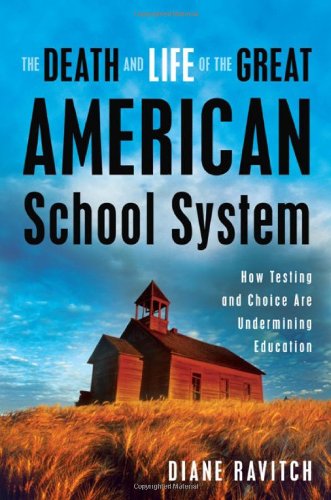
- BookThe Death and Life of the Great American School System: How Testing and Choice Are Undermining Education · Bookshop.org
In 1954, the U.S. Supreme Court held in Brown v. Board of Education that "separate but equal," the concept used to justify segregation, was unconstitutional. The common-school ideal offered education to the common person regardless of class, though race and religion still mattered; race discrimination and segregation made its promise of unity and equal access difficult to realize, including for Latin American, American Indian and Chinese American students in some states.
- ReadHistory of parent-driven education: Part 2 – From the common school movement to the mid-1990s - Sutherland Institute · Sutherland Institute
The Death and Life of the Great American School System by Diane Ravitch describes how the "educational establishment" promoted school choice, standardized testing and accountability, and argues these policies were "degrading the intellectual capacity of students."

Book links are Bookshop.org affiliate links. Curiate may earn a commission on purchases, at no extra cost to you — Bookshop.org also gives a share to independent bookshops.
Reading paths, built to arrive somewhere
Curiate turns what you are curious about into a short path — a quick lesson on an article, something to watch, and a book to go deep on. Free to browse.