Sociology of education and the reproduction of inequality
The sociology of education is the study of how public institutions and individual experiences affect education and its outcomes, focusing mostly on public schooling systems in modern industrial societies. How do schooling structures and cultural expectations shape unequal educational outcomes? By the end, readers will understand how research approaches and institutional practices help explain the persistence of inequality.
2 articles, 1 book
The reading path
- Readthe sociology of education · Wikipedia
Statistical and field research across numerous societies found a persistent link between an individual's social class and achievement, and suggested that education could achieve only limited social mobility. Sociological studies showed that schooling patterns reflected, rather than challenged, class stratification and racial and sexual discrimination; Neo-Marxists argued that school education produced a docile labour force essential to late-capitalist class relations. Political arithmetic research examines how school structures are implicated in social class inequalities in Britain, and has broadened to gender, ethnic differentials and international differences. Rather than relying on grand theory, it emphasizes empirical evidence and social policy; although rooted in quantitative methods, it has increasingly engaged with mixed methods.
- BookPedagogy of the Oppressed · Bookshop.org
Pierre Bourdieu, a sociologist, calls it "symbolic violence" when institutions devalue cultural backgrounds, leading to exclusion or failure, which can help explain how schooling reproduces inequality. Bourdieu emphasized that possessions function as cultural capital only when people have the embodied knowledge to use or appreciate them: a violin has this value when someone knows how to play it or understands its cultural significance. Appreciation is shaped by class-based access to learning, not wealth alone.
- ReadCultural Capital Theory of Pierre Bourdieu · Simply Psychology
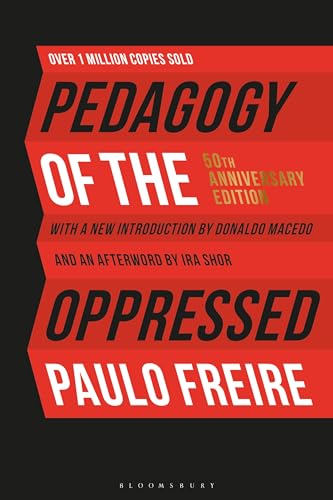
Pedagogy of the Oppressed by Paulo Freire describes a new relationship between teacher, student, and society, and Freire argues that learners should be co-creators of knowledge rather than treated as empty vessels.


Book links are Bookshop.org affiliate links. Curiate may earn a commission on purchases, at no extra cost to you — Bookshop.org also gives a share to independent bookshops.
Reading paths, built to arrive somewhere
Curiate turns what you are curious about into a short path — a quick lesson on an article, something to watch, and a book to go deep on. Free to browse.