The sociology of education
The sociology of education studies how public institutions and individual experiences affect education and its outcomes, focusing mostly on public schooling in modern industrial societies. The lessons help readers understand how education relates to social structures and inequalities. They consider education's connections to institutions, values, and people's experiences.
2 articles, 1 book · about 29 min of reading and viewing
The reading path
- Readthe sociology of education · Wikipedia · 17 min read
Talcott Parsons believed education's identification and labeling of some students as failures was "a necessary activity which one part of the social system, education, performed for the whole". The sociology of education also describes working class children being "cooled out" with the least qualifications, leading them to the least desirable jobs and keeping them working class. The Political Arithmetic tradition in the sociology of education began with Hogben (1938) and uses politically critical quantitative research to examine social inequalities, especially those generated by social stratification. Its works examined how school structures were implicated in social class inequalities in Britain. In the sociology of education, federal government subsidies for 'independent' private schools enable the rich to obtain 'good education' by paying for it. With this education, rich children perform better, achieve higher and obtain greater rewards, making the continuation of elite privilege and wealth possible.
- ReadRifts deepen over direction of education in the U.S. · Hechinger Report · 12 min read
The 2012 MetLife Survey of the American Teacher found evidence that teacher morale is low: just 39 percent of teachers reported being "very satisfied with their jobs," down 23 percentage points in five years. The survey findings add to a complicated picture of teacher sentiment in education.
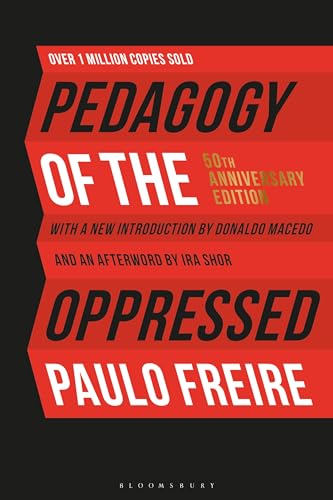
- BookPedagogy of the Oppressed · Bookshop.org
Pedagogy of the Oppressed by Paulo Freire describes a new relationship between teacher, student, and society. Freire argues that traditional pedagogy treats students as empty vessels, while learners should be co-creators of knowledge.


Book links are Bookshop.org affiliate links. Curiate may earn a commission on purchases, at no extra cost to you — Bookshop.org also gives a share to independent bookshops.
Reading paths, built to arrive somewhere
Curiate turns what you are curious about into a short path — a quick lesson on an article, something to watch, and a book to go deep on. Free to browse.