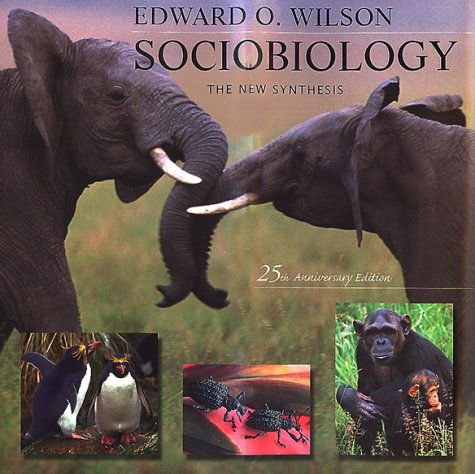
How evolution shapes social behavior in sociobiology
Sociobiology is a field of biology that aims to explain social behavior in terms of evolution. It argues that selection pressure led to the genetic evolution of advantageous social behavior.
Life changes through natural selection, and people can now change genes directly. These curations cover how natural selection reshapes populations, how evolution explains social behavior, genetic engineering, the ethics of engineered microbes, and how communities of microbes work together.
Sociobiology is a field of biology that aims to explain social behavior in terms of evolution. It argues that selection pressure led to the genetic evolution of advantageous social behavior.
Evolutionary biology is the part of biology that studies natural selection, mutation, genetic drift, and gene flow, the processes that account for life's unity and diversity. These lessons answer how natural selection reshapes populations and help readers understand how traits become more or less common. They follow the relationship between traits, survival, reproduction, and evolutionary change.
Genetic engineering uses technologies to change the genetic makeup of cells, including transferring genes within and across species to produce improved or novel organisms, and Herbert Boyer and Stanley Cohen generated the first GMO, a bacterium, in 1973. The lessons answer how genes can be deliberately changed and help readers understand the methods and choices involved.
The ethics of biotechnology is a field of study and professional practice concerned with ethical issues related to health and advances in biology, medicine, and technologies. It addresses ethical questions arising among the life sciences, biotechnology, medicine, politics, law, theology, and philosophy.
Microbiome research studies communities of microorganisms living together in a habitat. The lessons answer how microbial communities work together, and help readers understand how their interactions shape community life. They connect themes of cooperation, community formation, and relationships with hosts and habitats.
Curiate turns what you are curious about into a short path — a quick lesson on an article, something to watch, and a book to go deep on. Free to browse.